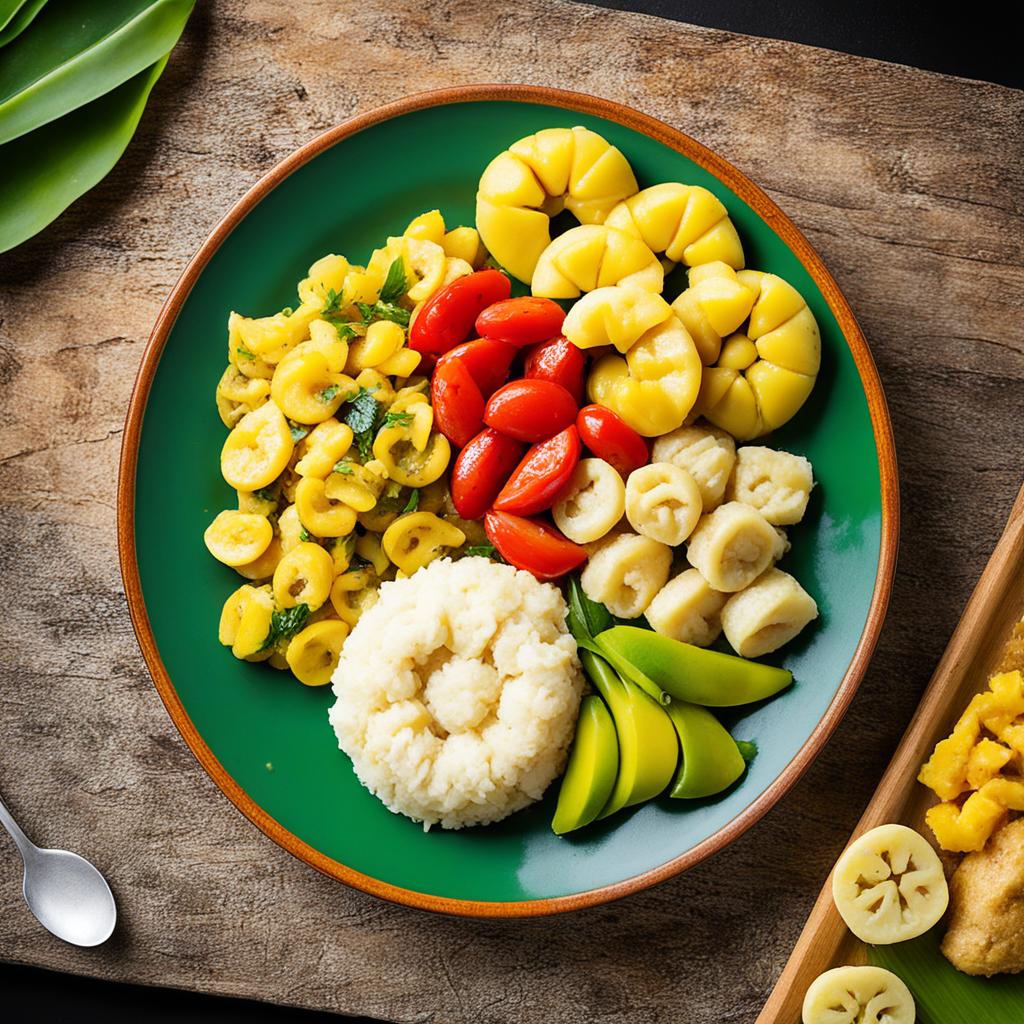
Jamaica’s National Dish: Ackee and Saltfish
Walking into my kitchen, I’m hit with the smell of ackee and saltfish. It takes me straight to Jamaica’s lively streets. This dish is Jamaica’s national treasure, bringing back memories of the Caribbean’s rich culture.
As an Amazon Associate I earn from qualifying purchases. This post may contain affiliate links. If you click on these links and make a purchase, I may receive a small commission at no additional cost to you.
Ackee and saltfish is more than food; it’s a story of Jamaican strength and creativity. The mix of sweet ackee and salty cod fish shows the island’s diverse history. It’s where African and European flavors come together, making a dish that stuns everyone.
Learning about this dish, I’m amazed by its history of resilience. Enslaved Africans brought ackee, while salted cod came from the Triangular Trade. Today, ackee and saltfish stands as a symbol of Jamaica’s culture. It’s more than a meal; it’s a key part of the nation’s identity.
The Origins of Jamaica’s National Dish
Ackee and saltfish, Jamaica’s famous dish, has roots in the country’s rich food history. It connects to West Africa and the transatlantic slave trade. Ackee, a fruit from West Africa, came to Jamaica in the mid-1700s, possibly on a slave ship. Now, it’s a key part of Jamaican food.
How Ackee and Saltfish Became a Cultural Icon
Saltfish, or salted cod, also became a big part of Caribbean food. It was a common food item traded between Europe, Africa, and the Americas. Slave owners used it to feed their workers because it was cheap and lasted a long time.
The mix of ackee and saltfish, with Jamaican spices and herbs, became a symbol of Jamaica’s culture. It shows the island’s mix of African, European, and Caribbean influences. Today, it’s Jamaica’s national dish, loved by Jamaicans and food lovers everywhere.
Exploring the Unique Flavors of Ackee and Saltfish
The mix of ackee and saltfish brings together a delicate, nutty taste with sharp, salty notes. Ackee’s soft texture and mild flavor let the bold saltfish shine. This mix creates a taste that’s uniquely Jamaican.
Adding onions, garlic, thyme, and Scotch bonnet peppers makes the dish even better. These ingredients bring the dish to life with their strong spices and smells. This blend of flavors shows off Jamaica’s rich history and diverse culture.
Preparing the Perfect Ackee and Saltfish
Learning to make Jamaica’s national dish, ackee and saltfish, is a journey worth exploring. It’s all about getting the ackee and saltfish just right for the best taste and texture.
Step-by-Step Instructions for a Delicious Meal
Start by soaking the saltfish in water for a few hours or even overnight. This helps cut down the saltiness. Then, boil it for 10 minutes to get rid of more salt. After boiling, drain the saltfish and set it aside.
Next, clean and boil the ackee to remove toxins. This is key because raw ackee can be dangerous. Once cooked, sauté the ackee with onions, garlic, and thyme. This makes a tasty base for the dish.
Now, mix the cooked saltfish with the sautéed ackee. Let the flavors blend together for that true Jamaican taste. Season with black pepper, paprika, and a bit of Scotch Bonnet pepper for a bit of heat. Your ackee and saltfish is now ready to enjoy.
By using these traditional methods, you can make a delicious ackee and saltfish in your kitchen. Enjoy the taste of Jamaica and its cultural heritage with every bite.
Jamaica’s National Dish: A Culinary Masterpiece
Ackee and saltfish is seen as a top dish in Jamaican food. It shows off the island’s rich culture and varied tastes. This dish is a result of Jamaican cooks mixing African, European, and indigenous tastes. They made a dish that is both unique and amazing.
The mix of the soft ackee and the strong saltfish, with its spices and aromatics, makes a dish that’s both delicate and full of flavor. Ackee and saltfish is more than just food. It’s a way to celebrate Jamaica’s lively food traditions and its cultural identity.
Jamaican food is a mix of tastes from different places. This mix has led to many dishes that are full of bold flavors and special spices. From jerk meat to slow-cooked oxtail, Jamaican food is known for its unique taste.
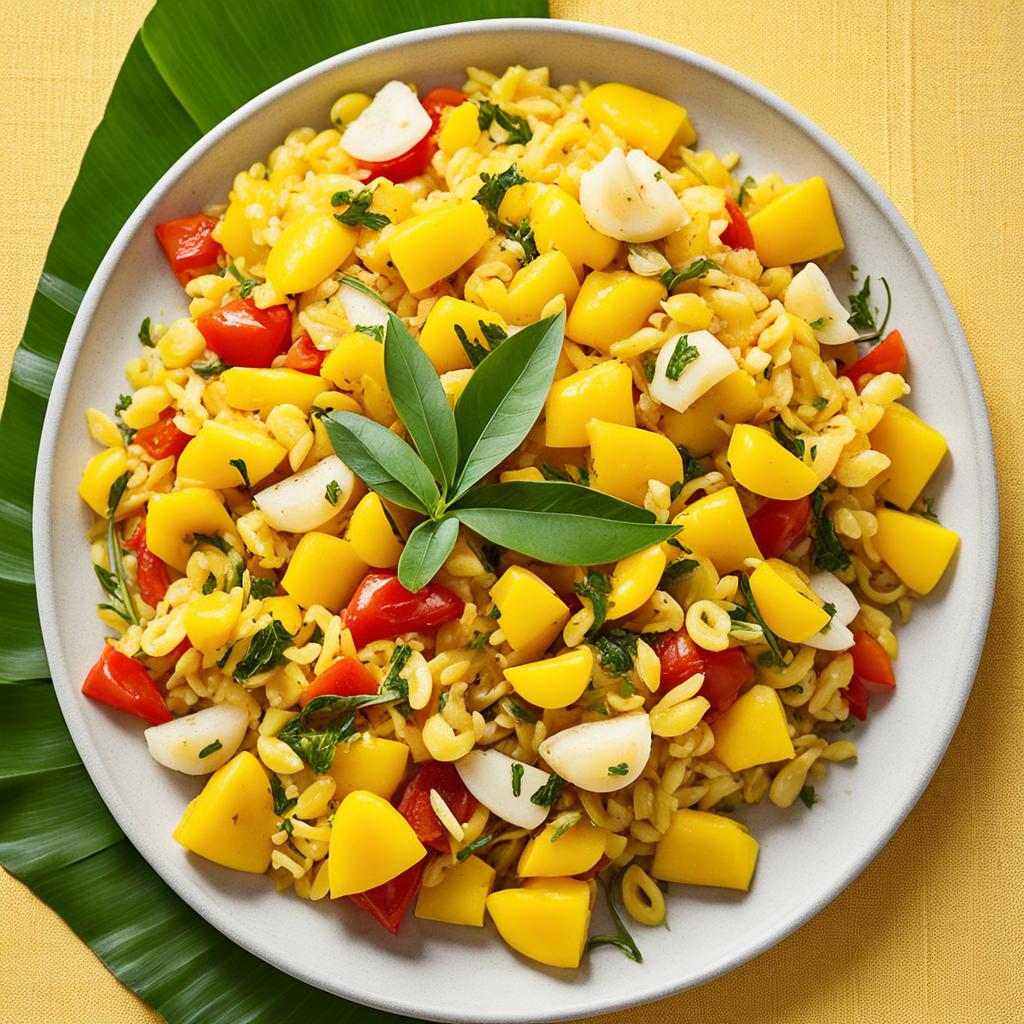
Ackee and saltfish, Jamaica’s national dish, is a true work of art in food. It combines ackee fruit, salted codfish, onions, tomatoes, and spices. This shows the creativity and skill of Jamaican cooks. They’ve made this dish a top example of Caribbean food.
Nutritional Benefits of Ackee and Saltfish
Jamaica’s national dish, ackee and saltfish, is not just tasty but also packed with nutrients. Ackee is full of vitamins and minerals like vitamin C, B6, and potassium. Saltfish is a lean protein source, low in fat but rich in omega-3 fatty acids.
This dish is a perfect mix of complex carbs, healthy fats, and proteins. It’s a great choice for a healthy Caribbean diet. It supports overall well-being by offering a balanced meal.
Ackee is mostly fat, with linoleic acid as the main fatty acid. A 100g serving of cooked ackee has 151 kilocalories, 15.2g of fat, and no cholesterol. It also has 0g saturated fat, 270mg potassium, and 240mg sodium.
Saltfish has about 138 kilocalories, 32.5g of protein, and 0.9g total fat per 100g cooked. It’s high in sodium, offering around 400mg per 100g. This should be kept in mind when planning your diet.
Ackee and saltfish offer more than just the basics. Ackee supports digestive health with its fiber and helps control blood pressure with potassium. It’s also full of vitamins C and zinc, and vitamin A for eye health.
Adding ackee and saltfish to your diet can make for a nutritious and tasty meal. Knowing the nutritional value of this Jamaican dish helps you make better food choices. It’s a great way to support a healthy lifestyle.
Where to Find Authentic Ackee and Saltfish
Finding authentic ackee and saltfish might seem hard, especially if you’re not in the Caribbean. But, with a little effort, you can enjoy this iconic dish in your area.
Discovering the Best Jamaican Restaurants and Recipes
You can find canned ackee in Caribbean or international grocery stores and online. But for a real taste, look for Jamaican restaurants in areas with many Caribbean people. These places use old recipes and methods, giving you a true Jamaican flavor.
Want to make it at home? Check out Jamaican cookbooks and online guides for trusted recipes. This way, you can get the right mix of flavors and textures that make ackee and saltfish special.

In places like Kingston and New York City, you can taste Jamaica’s national dish. Enjoy it at a Jamaican restaurant or make it yourself. Ackee and saltfish is a must-try for Caribbean food lovers.
The Cultural Significance of Jamaica’s National Dish
Ackee and saltfish is more than a tasty dish in Jamaican food; it’s a cultural symbol. It shows Jamaica’s rich history and how African, European, and indigenous cultures mixed. This dish reflects Jamaica’s unique blend of flavors and traditions.
The ackee fruit connects to West Africa, and saltfish comes from the Triangular Trade. Together, they make a dish that’s truly Jamaican. Ackee and saltfish shows how Jamaicans turned different ingredients into a dish loved worldwide.
This dish tells the story of Jamaican ancestors’ strength over time. It went from a food for enslaved people to a national favorite. The Patois language, from West African tongues, shows how the slave trade brought new cultures together. This makes ackee and saltfish even more meaningful.
Ackee and saltfish is often eaten for breakfast but means more than that. It’s a symbol of Jamaican identity and Caribbean cuisine’s richness. It feeds the body and soul, keeping Jamaican culture alive.
Variations and Adaptations of Ackee and Saltfish
[Ackee and saltfish](https://moniquemath.com/jamaica-food/ is Jamaica’s national dish. Over time, many adaptations and variations have come about. Some cooks use different fish like mackerel or herring instead of saltfish. Others add ingredients like tomatoes, bell peppers, or coconut milk for new tastes.
This dish can be served with rice and peas, boiled green bananas, or fried dumplings. It depends on what you like and local cooking traditions. These changes show how ackee and saltfish can be made in many ways. They highlight Jamaican and Caribbean cooks’ creativity and their love for their food.
Ackee, Jamaica’s national fruit, comes from West Africa. It’s found in the U.S., Canada, and the U.K. in cans. Saltfish, or salted cod, was brought to Jamaica a long time ago. It’s now a key part of Jamaican food. Whether you stick to the original recipe or try something new, the different ways of making ackee and saltfish show the rich and varied Jamaican cuisine and Caribbean food culture.
Jamaica’s National Dish: A Taste of the Island
Ackee and saltfish is more than a dish; it’s a true taste of Jamaica. It blends African, European, and indigenous flavors into a unique Jamaican taste. When you try it, you feel like you’re in Jamaica, where this dish fills the air.
Ackee, Jamaica’s national fruit, is sent out to the world in about 15,000 tonnes each year. Saltfish comes into the island around 7,000 tonnes a year. This shows how cultures mix in Jamaican cuisine. Ackee and saltfish is more than food; it’s a way to feel Jamaica’s spirit and culture.
Trying this dish is like going on a food journey through Jamaica. It’s a big part of Jamaica’s food exports, making up 60% of the total. This shows how important it is to Jamaican culture and taste.
Conclusion
Ackee and saltfish is Jamaica’s national dish, a true culinary masterpiece. It shows off the island’s rich culture and diverse tastes. This dish came from the mix of African, European, and indigenous flavors during the transatlantic slave trade.
The mix of the soft ackee fruit and the strong saltfish, with its spices, makes a unique taste. It’s more than food; it’s a symbol of Jamaica’s spirit. It connects the past and present, showing off the Caribbean’s culinary art.
Trying ackee and saltfish lets you taste Jamaica’s history and culture. It’s a journey into the heart of Jamaican food. Whether eating it in a restaurant or making it yourself, you’ll feel the essence of Jamaican culture.