Bob Marley Facts: Unveiling the Reggae Legend
The name Bob Marley brings to mind the magic of reggae music. He was born on February 6, 1945, in Nine Mile, Jamaica. This legendary figure started from humble beginnings and became a global icon of reggae music and Rastafarian beliefs.
As an Amazon Associate I earn from qualifying purchases. This post may contain affiliate links. If you click on these links and make a purchase, I may receive a small commission at no additional cost to you.
His voice and lyrics touched hearts worldwide. He fought for social justice with his music. This made him one of the most influential musicians ever.
Bob Marley grew up facing tough times and racial issues. But music became his escape. He joined The Wailers with Bunny Wailer and Peter Tosh. Together, they created the reggae sound and shared messages of love, unity, and social change.
Marley died too soon at 36, but his impact lives on. His legacy and impact inspire many. He continues to influence music and fans around the world.
The Early Life and Humble Beginnings
Bob Marley was born Nesta Robert Marley on February 6, 1945, in the rural area of bob marley nine mile, Jamaica. His life started in a humble and tough way. His dad, Norval Sinclair Marley, was a British naval officer. His mom, Cedella Booker, was a Jamaican homemaker.
Even though they were married, Norval’s family didn’t accept their union. He was mostly absent from bob marley childhood life until he died when Bob was just 10 years old.
Biracial Heritage and Childhood Struggles
As a child, bob marley biracial heritage made life hard for him. In the poor Trenchtown neighborhood of Kingston, people called him “White Boy.” But he became known as “Tuff Gong” for his toughness and fighting skills.
He faced many challenges because of his mixed race. Yet, he kept going, showing his strength through his bob marley upbringing.
The Rise of a Reggae Icon
In the early 1960s, Jamaica’s music scene was taking off. Bob Marley teamed up with his friend Bunny Wailer and Peter Tosh to form The Wailers. Their music, inspired by American groups like The Impressions, spoke to Jamaica’s poor and quickly drew a big crowd. Their hit single, “Simmer Down,” sold over 80,000 copies.
Forming The Wailers and Early Musical Journey
As Jamaica’s music changed from ska to rocksteady and then reggae, The Wailers changed with it. They adopted the reggae style and made music that blended with the bob marley reggae sound. Leaving the Studio One label without fair pay helped them become famous worldwide and made bob marley the wailers a key name in reggae.
Embracing Rastafarian Beliefs and Reggae Sound
Bob Marley found Rastafarian beliefs in the early 1970s, which changed his life. This new path showed in their music, with songs about justice, unity, and the power of Jah. The Wailers’ mix of reggae, Rastafarian themes, and messages of hope won fans globally, making bob marley rastafarian beliefs a key part of reggae.
Global Impact and Enduring Legacy
Bob Marley’s music reached people all over the world, making him a global icon. His songs like “One Love,” “No Woman, No Cry,” and “Redemption Song” shared messages of love and unity. He toured a lot, performing live and sharing his beliefs in Rastafarianism.
After he died in 1981 at 36, Marley’s bob marley enduring legacy kept inspiring many. His image stands for peace and unity. His album “Legend” is one of the top-selling reggae albums ever.
Marley’s bob marley global impact helped social justice movements. His bob marley messages of love unity social change encouraged people worldwide to fight for fairness and justice.
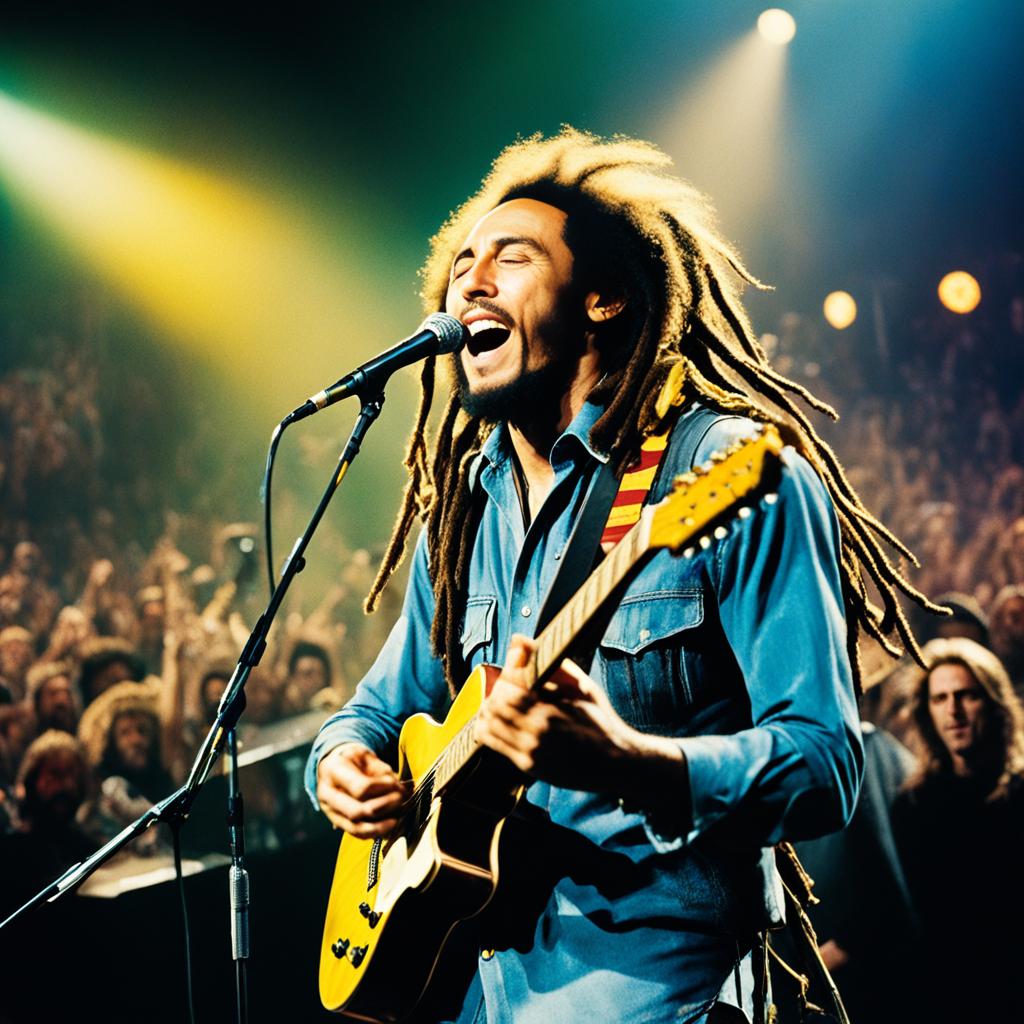
Spreading Messages of Love, Unity, and Social Change
Marley’s music and actions came from his Rastafarian beliefs. He believed in a spiritual life, African roots, and living close to nature. His songs, like “War,” talked about African unity and self-reliance.
His song “Get Up, Stand Up” became a anthem for human rights groups. This made him a key figure in music and culture.
Facts about bob Marley
Bob Marley, the legendary reggae singer, was born Nesta Robert Marley on February 6, 1945, in Nine Mile, Jamaica. He grew up facing tough times and bullying because of his mixed race. But music became his escape, and he started the band the Wailers in 1962.
Reggae music, with its unique beats and meaningful words, became a big deal. Marley became its top voice, reaching fans all over the world. He shared the message of Rastafarianism through his songs. Marley’s music crossed borders and cultures, making him a global star
Sadly, Bob Marley died at 36 in 1981 from skin cancer. Yet, his short life made a huge mark on music and social causes. He won many awards, like the United Nations Peace Medal in 1978 and a Grammy Lifetime Achievement Award in 2001.
Even after his death, Marley’s music keeps growing in popularity. His songs are played over 1 billion times a year in the US. His legacy shows how powerful his music and message of love and change were.
Bob Marley’s Influential Music and Awards
Bob Marley’s music has changed the world. He was welcomed into the Rock and Roll Hall of Fame in 1994. This showed how big his impact was. His album “Exodus” was named Album of the Century by Time Magazine in 1999.
Marley’s song “One Love” was called Song of the Millennium by the BBC. This made him a true music legend. Even though he didn’t get a Grammy during his life, he got the Grammy Lifetime Achievement Award in 2001.
This award is for artists who made big artistic contributions to music. It’s a big honor for bob marley music and his awards.
His “Legend” album has sold over 250,000 copies every year since 1984. This shows how much bob marley’s music is loved around the world.
Personal Life and Family
Bob Marley, the famous reggae artist, had a life full of love, family, and some controversy. He married Alpharita Constantia “Rita” Anderson in 1966 at 21. Despite issues like both having affairs, they stayed together until his death.
Marriage to Rita Marley and Children
Bob Marley officially had 11 children, but the true number is unclear due to many claiming to be his after he died. His kids include Cedella Marley, David “Ziggy” Marley, and Stephen Marley, who all carry on his musical legacy. Julian Marley, Ky-Mani Marley, and Damian “Jr. Gong” Marley are also part of his family. Despite the challenges, Bob Marley’s family keeps his legacy alive through his music and message.
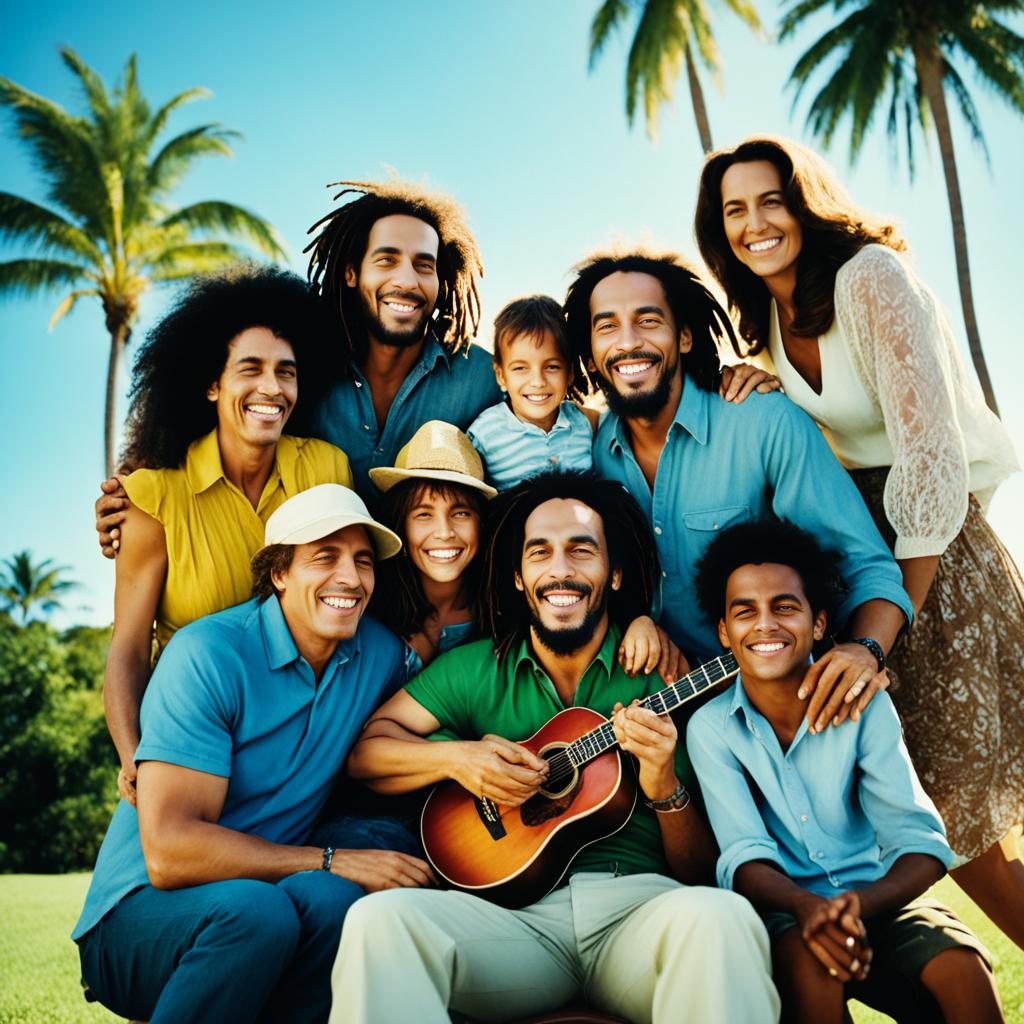
Activism and Philanthropic Efforts
Beyond his famous music, Bob Marley was a strong activist and gave a lot to charity. On December 3, 1976, armed men attacked Marley’s home, shooting him. Yet, he still played at the Smile Jamaica concert two days later to bring people together during a violent time in Jamaica.
Marley’s songs and words of love and change moved many young Black British people. Famous poet Benjamin Zephaniah said Marley’s music pushed him to create art. Marley was a symbol of peace, love, and fighting for what’s right, telling people to stand up against oppression.
Marley helped many causes in Jamaica and around the world with his charity work. The Smile Jamaica Concert in 1976 and the One Love Peace Concert in 1978 were to help the poor and bring people together. The Bob Marley Foundation was set up after the One Love Peace Concert to keep his work going in education and culture in Jamaica.
Intriguing Stories and Little-Known Facts
Beyond his legendary music career, Bob Marley’s life was full of fascinating stories and unexpected facts. He could read palms as a child, which was quite a skill. Marley accurately predicted the futures of his friends and neighbors until he was seven. But after moving back to his rural village, he decided his true calling was to be a singer. He stopped reading palms for the rest of his life.
Marley also spent time in the United States, taking on various jobs to support himself. He worked as a lab assistant at DuPont and even on an assembly line at a Chrysler plant, using the name “Donald Marley.” These stories show the diverse and captivating aspects of Marley’s life, beyond his music.
Conclusion
Bob Marley’s life and music still touch and inspire people all over the world. He went from a simple start in Jamaica to becoming a reggae legend known globally. His music spread love, unity, and the call for social change. It crossed cultural and geographical lines, making him a symbol of peace and unity.
Even though he’s no longer with us, Bob Marley’s legacy lives on. His music is a timeless treasure that will be loved for years to come. With hits like “Natty Dread” and “Rastaman Vibration,” he’s one of the top-selling artists ever, with over 75 million records sold worldwide.
Bob Marley’s influence on music and culture is huge. He was inducted into the Rock and Roll Hall of Fame in 1994 and ranked 11th on “Rolling Stone’s” list of the 100 Greatest Artists. He also won a Grammy Lifetime Achievement Award. His songs like “One Love/People Get Ready” and “No Woman, No Cry” are classics that bring people together. Marley’s message of truth and harmony continues to inspire, showing how music can spark change.